

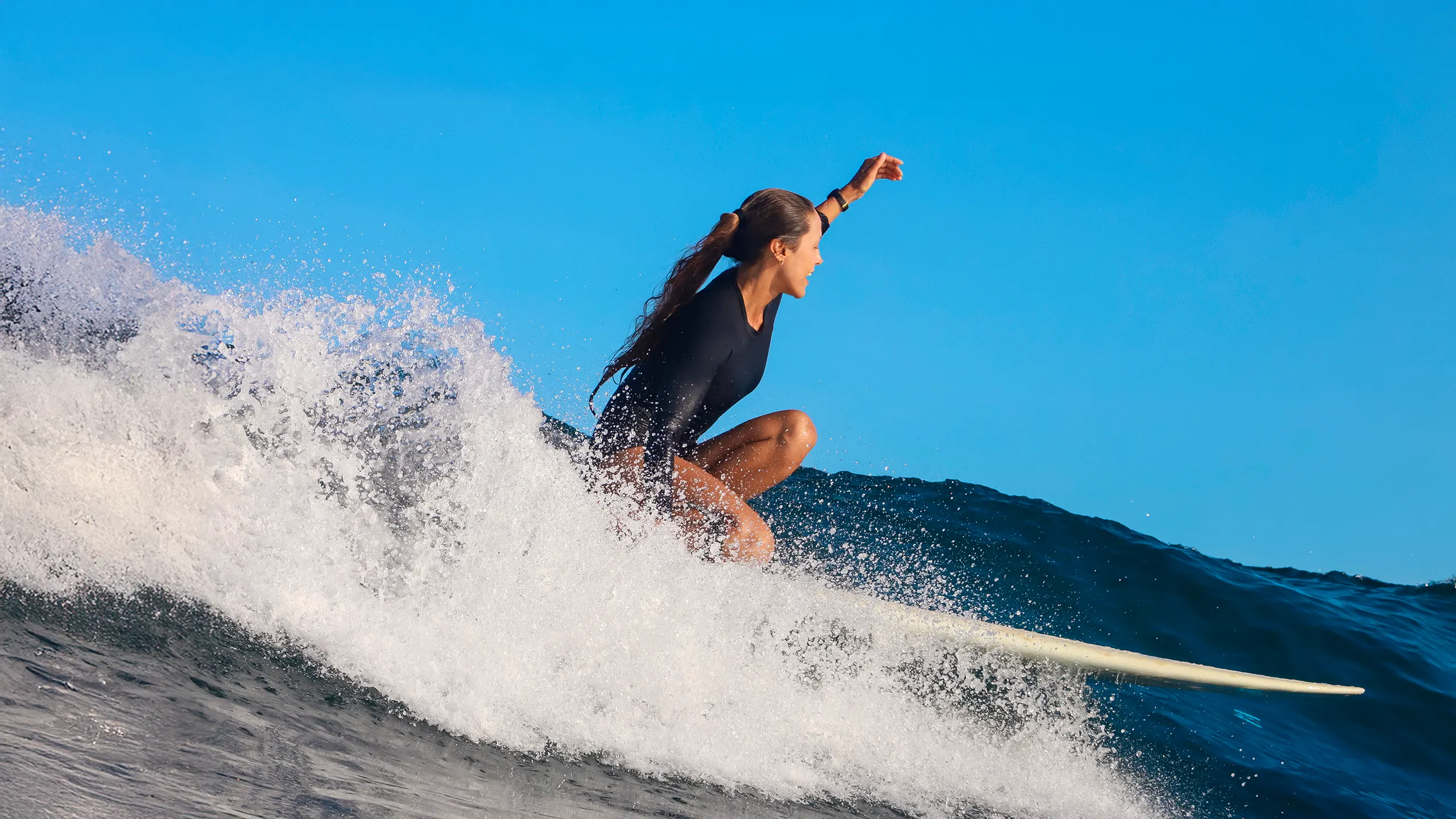
Learning to surf is often described as a collection of techniques. Paddle this way. Stand up like that. Put your feet here. In reality, progress comes from understanding how a few core skills interact with each other in moving water. Most beginners struggle not because they lack strength or balance, but because they are trying to solve isolated problems instead of learning how the ocean, the board, and their body work together.
This is a practical breakdown of the things that actually matter early on. Not tricks. Not style. Just the fundamentals that quietly determine whether surfing starts to feel possible or endlessly frustrating.
How You Move the Board Through Water
Everything starts before you ever stand up.
Paddling efficiency
Paddling is not about speed so much as consistency. Beginners often paddle too shallow, too wide, or with frantic timing. Efficient paddling keeps the board moving smoothly without wasting energy. When the board glides between strokes instead of stalling, it becomes much easier to match the speed of an approaching wave.
Strong paddling also affects positioning. If you cannot move yourself a few feet forward or back in the lineup when needed, everything else becomes reactive.
Momentum before the wave
Most missed waves are not caused by bad timing at the last second. They are caused by arriving too late to the takeoff zone with too little speed. Starting to paddle earlier than feels necessary is often the difference between being pushed into a wave and actually entering it with control.
Momentum is what allows the wave to carry you. Without it, the board sinks, the nose lifts, and the wave passes underneath.
Standing Up Is the Smallest Part of the Problem
The pop up gets all the attention, but it is rarely the real issue.
Weight distribution on the board
Where your weight sits on the board determines how the board behaves. Too far forward and the nose buries. Too far back and the board stalls. Good surfers are constantly adjusting weight in subtle ways, often without realizing it.
For beginners, simply learning how small shifts change speed and stability can unlock progress faster than practicing the pop up itself.
Balance as a moving target
Balance in surfing is not static. The board is accelerating, decelerating, and angling across moving water. What feels balanced while paddling can feel unstable once the board drops into a wave.
Stiffness creates more problems than imbalance.
Understanding Where to Be and When
Surfing becomes far less exhausting once positioning improves.
Where to sit in the lineup
Being ten feet too far inside or outside can make waves feel impossible to catch. Beginners often sit where the waves look appealing instead of where they are actually forming. Learning to notice where waves break consistently, where they lose power, and where surfers ahead of you are catching waves helps narrow that zone.
Good positioning reduces paddling, frustration, and collisions.
Reading waves early
Waves give clues long before they arrive. Shape, spacing, and how the water rises all signal whether a wave is worth paddling for. Waiting until the wave is already steep usually means reacting too late.
Reading waves early allows calmer decisions and smoother entries.
Staying on the Wave Once You’re Up
Catching the wave is only the beginning.
Keeping momentum
Many beginners stand up and immediately slow down. This happens when weight stays too centered or the board points straight toward shore. Even gentle waves require some angle and intention to keep moving.
Momentum is what creates time. Time is what allows learning.
Thinking of the wave as a moving hill
A useful way to understand wave riding is to stop thinking of the wave as water and start thinking of it as a constantly changing hill. Riding straight down the hill uses all the energy at once. Angling back up the face preserves speed and creates time. Because wave rides are naturally short, reusing that energy is often what separates a brief stand up from a long, flowing ride.
Waikiki waves are well suited for learning this because they tend to break more slowly and predictably. That slower pace gives beginners time to feel how speed builds, fades, and can be reused instead of disappearing immediately.
Surfing With Other People in the Water
This part is often underestimated, but it shapes every session.
Rules and shared space
Surfing has rules that exist to prevent collisions and conflict. Most tension in the water comes from misunderstanding, not aggression.
Water politics and awareness
Crowds change behavior. Waves disappear faster. Lineups tighten. Being observant and patient matters just as much as ability.
Respect travels faster than talent.