

Why So Many First-Time Surfers Choose Waikiki
Waikiki is one of the most searched surf destinations in the world for beginners. Warm water, consistent waves, and professional instructors make it an easy entry point for people who have never touched a surfboard before.
What Happens Before You Even Touch the Water
Most surf lessons start on the beach with a short safety and technique briefing. Instructors explain board positioning, paddling basics, how to pop up, and how to fall safely. This prep work prevents common mistakes and speeds up learning once you are in the water.
Why Soft-Top Boards Are Used for Lessons
Beginner surf lessons almost always use large, soft-top boards. These boards are wider, thicker, and far more stable than fiberglass boards. They paddle easily, catch waves earlier, and reduce injury risk during wipeouts.
The First Waves Are Smaller Than You Expect
Your first waves will likely be gentle, knee-to-waist-high rollers. These smaller waves are intentional. They allow you to focus on balance and timing instead of fear or speed. Most beginners are surprised by how manageable the waves feel.
How Instructors Help You Catch Waves
Instructors position you in the right spot, push you into waves, and give real-time feedback. This removes the hardest parts of surfing for beginners. With help, many first-time surfers stand up within the first 10 to 20 minutes.
Falling Is Normal and Part of the Process
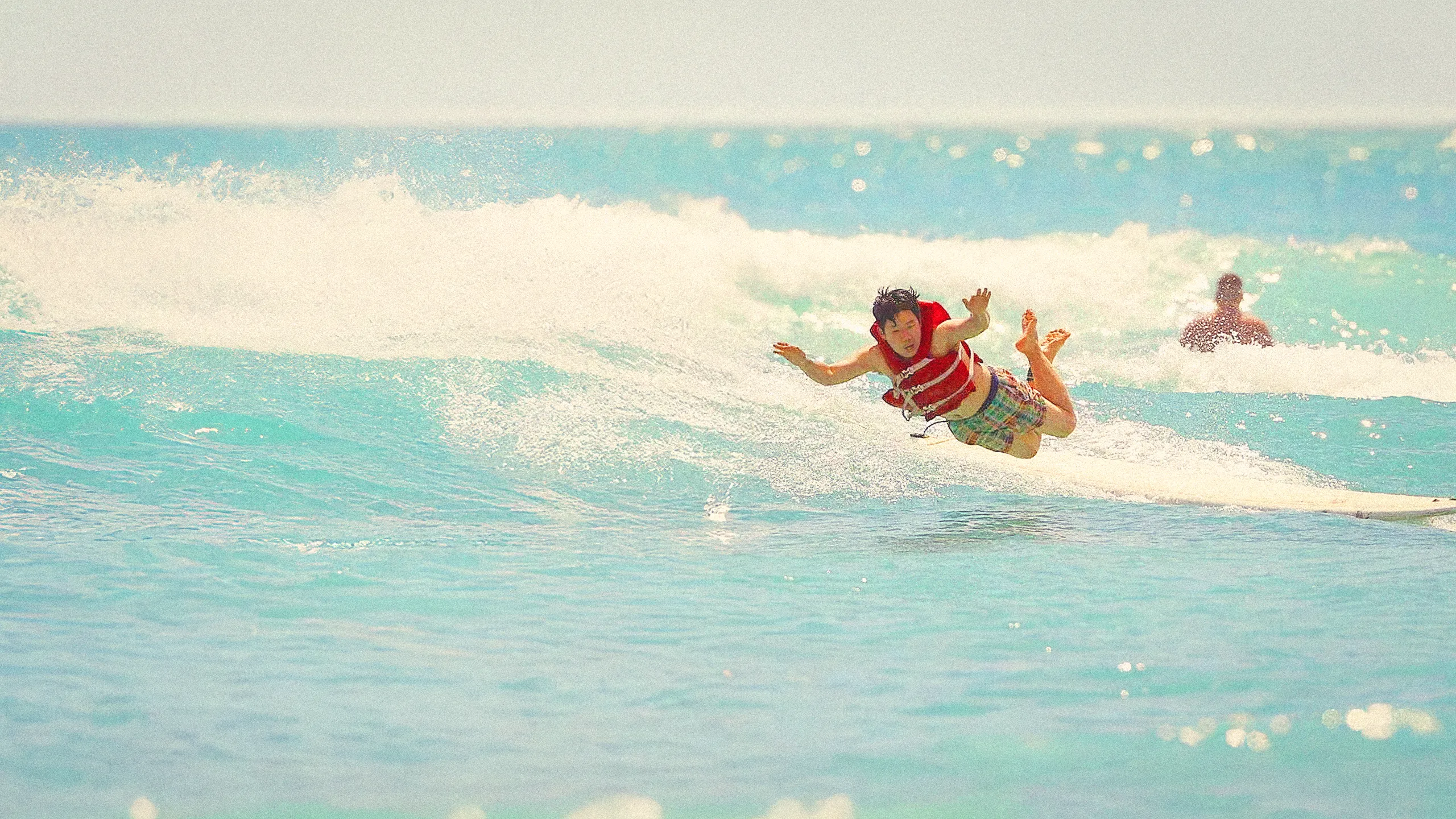
Wipeouts are expected and harmless in beginner conditions. Falling teaches you how to dismount safely and builds comfort in the water. Most falls happen at low speed in shallow, sandy or reef-protected areas.
How Long It Takes to Stand Up
Many beginners stand up successfully during their first lesson. Staying up for longer rides usually comes later. Progress depends on balance, fitness, and listening to instruction rather than strength or athleticism alone.
What to Wear and Bring
Surf schools typically provide boards and rash guards. You should bring sunscreen, water, and a towel. Jewelry and loose items should be left behind. Footwear is optional depending on reef conditions.
Group Lessons vs Private Lessons
Group lessons are social and budget-friendly, but private lessons offer faster progress and personalized feedback. Private instruction is often better for nervous beginners or those short on time.
Why Confidence Matters More Than Strength
Surfing is not about brute force. Relaxation, timing, and trust in the board matter more. Waikiki’s conditions allow beginners to build confidence quickly without feeling overwhelmed.
What Comes After Your First Lesson
After a successful first lesson, many people book additional sessions or rent boards to practice. Waikiki’s beginner breaks allow steady progression from assisted rides to independent wave catching.